
August 7, 2026 - PBS News Hour full episode
8/7/2026 | 57m 46sVideo has Closed Captions
August 7, 2026 - PBS News Hour full episode
August 7, 2026 - PBS News Hour full episode
Problems playing video? | Closed Captioning Feedback
Problems playing video? | Closed Captioning Feedback
Major corporate funding for the PBS News Hour is provided by BDO, BNSF, Consumer Cellular, American Cruise Lines, and Raymond James. Funding for the PBS NewsHour Weekend is provided by...
August 7, 2026 - PBS News Hour full episode
8/7/2026 | 57m 46sVideo has Closed Captions
August 7, 2026 - PBS News Hour full episode
Problems playing video? | Closed Captioning Feedback
Where to Watch PBS News Hour
PBS News Hour is available to stream on pbs.org and the PBS app.
Providing Support for PBS.org
Learn Moreabout PBS online sponsorshipAMNA NAWAZ: Good evening.
I'm Amna Nawaz.
Geoff Bennett is away.
On the "NewsHour" tonight: The U.S.
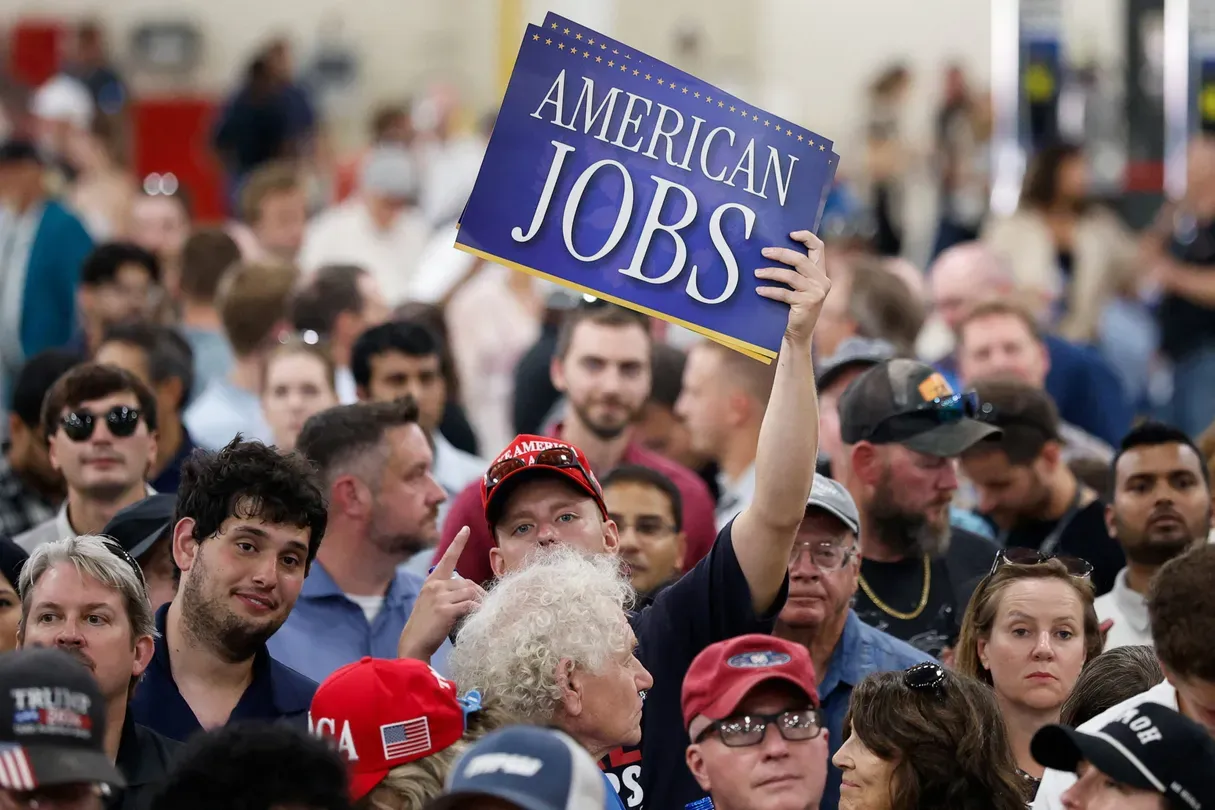
jobs market unexpectedly stalls in July, raising new questions about the strength of the economy.
Colombia's new president vows to fight his country's powerful drug traffickers with the help of the U.S.
And we explore why so many in Maui are still stuck in limbo three years after the island's devastating wildfires.
WARREN FREELAND, Front Street Recovery: Everybody that I have talked to without exception wants to rebuild, just rebuild what they had before.
(BREAK) AMNA NAWAZ: Welcome to the "News Hour."
New labor data out today shows the U.S.
economy lost jobs last month when economists had predicted modest growth.
In all, there was net loss of 23,000 jobs in July.
Newly revised numbers from May and June also showed 103,000 fewer jobs created than originally reported.
The unemployment rate ticked down from 4.2 percent to 4.1, a function of fewer people seeking jobs.
Joining us with a look at what the numbers mean is Heather Long.
She's the chief economist with Navy Federal Credit Union.
Great to see you.
HEATHER LONG, Chief Economist, Navy Federal Credit Union: Thanks for having me.
AMNA NAWAZ: So this is not the jobs report many people were expecting.
Where do you see the biggest weaknesses here?
HEATHER LONG: Yes, this was a real wakeup call, definitely a bleak report.
As you pointed out, it wasn't just week in July with those losses.
And they were pretty broad-based.
Hospitality sector lost jobs.
Education lost jobs.
Retail, and even the financial sector, I mean, with the stock market doing so well, lost jobs.
But you also had revisions down, as you mentioned, in May and June.
And I think that's what really shifted the view on Wall Street and here in Washington about how well this economy is actually doing.
The belief was that things were maybe getting a little better, that hiring was picking up, and that's really been dashed after this report.
AMNA NAWAZ: Let's dig a little deeper into some of those.
Job losses and hospitality in particular, how much of that would you attribute to the World Cup, which was largely played in the U.S.
and ended in July?
HEATHER LONG: Yes, it was definitely surprising to see job losses and hospitality in June and July.
And I think it's both supply and demand.
I know economic-speak here, but some of it is the affordability crisis.
Families just aren't going out to eat as often as they were before.
And then, of course, the Tartan Army has left Boston.
You don't have people kind of drinking the bars dry anymore.
HEATHER LONG: I think also supply, labor supply is impacting hospitality.
What I mean by that is, look, we all know what's going on with immigration policy.
There are a lot of immigrants who traditionally work in the hospitality sector.
Some places are reporting difficulty finding enough workers now.
AMNA NAWAZ: That's where you're seeing the crackdown show up in the data.
AMNA NAWAZ: There were some areas of growth, we should point out, health care, construction, modest growth in manufacturing.
What do those numbers tell us?
HEATHER LONG: This is -- health care is an ongoing story.
It's been the one bright spot in the job market for the past two years.
Hey, we got an aging population.
That's pretty explanatory.
Construction is interesting.
That's been a real pickup this year.
It's the A.I.
boom.
These construct -- big data centers are going up across the country, and it's been a revival for construction and manufacturing.
After a real slump last year, manufacturing has gained about 30,000 jobs so far this year.
It's not a ton, but you got to build the machines to build the data centers and to build all those factory parts inside.
AMNA NAWAZ: I know another data point, a trend you have been tracking closely is women in the work force.
We saw in these last month's numbers, a continuing decline of the number of women in the work force.
The National Women's Law Center was actually out with a recent analysis that found over 845,000 women have left the labor force this year.
That's compared to 400,000 men.
What is going on here?
HEATHER LONG: I think it's really worrying.
What you're seeing really in the past two years is that women with young children are leaving the labor force.
They're just throwing up their hands and saying, I can't do it anymore, and particularly women with children 5 and under.
And that's both college-educated women, who used to have those work-from-home jobs, and now they're being told they have to return the office, but also non-college-educated women who work in retail and education and other sectors that used to be giving them more opportunity, more flexibility.
And now it's you have to be there from 9:00 to 5:00 or whatever those hours are.
And you can see with the childcare that are so expensive and less flexibility, women can't do it.
The other alarming point in this jobs report that kind of goes alongside that, wage growth weakest in five years, 3.2 percent.
That is totally wiped out by inflation.
That financial squeeze is real for a lot of households.
AMNA NAWAZ: We hear that from a lot of folks we talk to out in the country.
And I want to ask you too about the job seekers, because we did see the number of people who consider themselves in the work force, that also dropped.
What should we understand about that?
HEATHER LONG: Yes, that was the lowest in five years for labor force participation.
I will say that it's mainly folks who are retiring, some willingly, some forced, they can't find a job, 55-plus.
And the other interesting one, young people still struggling a lot, and of course, the immigration factor.
Foreign-born workers are definitely down due to the White House immigration policies.
The one encouraging number in this report, let's call what would -- economists call, we have some of not the greatest names for things, but prime-age labor force participation, so workers between the ages of 25 and 54, that did rebound a little bit.
So, again, that's where you see people in their prime working years who have a job.
They are clinging to that job right now.
AMNA NAWAZ: That's chief economist for the Navy Federal Credit Union Heather Long.
Thank you so much for being here and help us make sense of these numbers.
HEATHER LONG: Thank you.
AMNA NAWAZ: We start the day's other headlines in Washington, D.C.
A federal appeals court ruled that President Trump can't continue building his $400 million White House ballroom without congressional approval.
In a 2-1 ruling, the judges sided with preservationists in finding that the president does not have the authority to build the 90,000-square-foot structure on the site where the East Wing once stood.
But construction may not stop right away.
The judges gave the administration two weeks to appeal the ruling to the Supreme Court.
President Trump called the decision unjust and said it should be overturned -- quote -- "in its entirety."
In the meantime, President Trump is reviving his push to remove Lisa Cook from the Federal Reserve Board of Governors.
The "News Hour" has obtained a letter the White House sent to Cook this week saying it is considering removing her and giving her 21 days to respond to unproven allegations of mortgage fraud.
Trump and his allies tried to force Cook out last year on similar grounds.
She filed a lawsuit challenging her dismissal, and, in June, the Supreme Court blocked Trump from firing Cook while her suit is pending.
But they did not weigh in on the underlying allegations against her.
Cook's lawyer called the claims baseless.
In Thailand, a student shot and killed at least seven people today, including five at his high school outside of Bangkok.
Officials say the 14-year-old killed his grandparents at their home first before opening fire at the school using a gun that belonged to his grandfather.
They say he then took his own life.
Students who've been blurred by Thailand's public broadcaster for privacy were hurried out of the building as others consoled one another.
Hospital officials say nearly two dozen people were hurt, some critically.
Investigators are still searching for a motive, but on a visit to the school, the country's prime minister said mental health was a factor.
ANUTIN CHARNVIRAKUL, Prime Minister of Thailand: This is, -- it is the violence, but it is not caused by criminals.
It is caused by an individual who has -- who had carried lots of pressures and tensions.
AMNA NAWAZ: Classes have been suspended at the school through the end of next week.
The shooting has revived a debate about gun laws in Thailand, which has one of the highest rates of gun ownership in all of Asia.
A red flag warning remains in effect for parts of Washington state as firefighters work to contain a number of blazes.
Officials say more than 850 buildings have burned and entire neighborhoods have been destroyed since the fires broke out last weekend.
Tens of thousands of people were evacuated, and police say it could be weeks before everyone is allowed back home due to the toxic air and potential for new fires.
In the meantime, the man charged with starting one of the fires appeared in court via video yesterday.
Police say that Aaron Farinacci planned the crime for weeks beforehand and chose a hot, windy day to cause maximum damage.
In Minnesota, planes were back in the air today after an air traffic control outage in Minneapolis grounded hundreds of flights across the Midwest.
It happened yesterday afternoon and lasted about two hours, bringing chaos to passengers here at Minneapolis-St.
Paul International Airport.
The FAA says it was due to an equipment outage at a facility that handles air traffic stretching across nine states in the Midwest.
Officials say service has been restored and an investigation is under way.
In Europe, a blistering heat wave is breaking records in multiple countries, helping fuel both wildfires and a worsening drought.
In Central Europe, both Austria and Slovakia reached new all-time highs.
In Hungary, the heat touched 42 degrees Celsius yesterday, or about 108 degrees Fahrenheit.
And, in Italy, nearly all of its major cities were under the highest red alert for heat today.
In Rome, residents and tourists alike struggled to stay cool.
CAROLINE GONZALES, Tourist from Mexico: Also my fan my fan.
But it's not charged right now, so I literally am dying out here.
AMNA NAWAZ: In the meantime, firefighters in Serbia are using helicopters to drop water on wildfires that ignited this week.
Elsewhere in Serbia, water levels for the Danube River have gotten so low, they have revealed sunken World War II ships, some abandoned by Nazi Germany towards the end of the war.
Facebook owner Meta says it will appeal a ruling by a New Mexico court ordering the company pay $567 million in a child safety case.
Most of that money will go towards treatment services for young people, with the rest meant for awareness and prevention efforts, among others.
It is the largest such penalty yet for the tech giant, and it comes on top of a separate $375 million penalty that jurors ordered during an initial phase of the same case for misleading users about the safety of its platforms.
In a statement, Meta says it remains confident in its record of protecting teens online.
On Wall Street today, stocks rose after that weak jobs data eased concerns about the Fed raising interest rates.
The Dow Jones industrial average added around 150 points on the day.
The Nasdaq climbed more than 1 percent.
The S&P 500 also posted a decent gain to close out the week.
Still to come on the "News Hour": President Trump's pick for attorney general, Todd Blanche, appears to clear his last hurdle for confirmation; a severe drought and aging infrastructure plunge Puerto Rico into a water crisis; and David Brooks and Jonathan Capehart weigh in on the week's news.
At the U.S.
Capitol, a wild day of decision and indecision.
The Senate today passed the toughest sanctions bill on Russia yet and is now on track to confirm attorney general nominee Todd Blanche.
But our congressional correspondent Lisa Desjardins joins us now to report that a slew of other high-priority items are still tangled, largely due to the Republican divide.
Good to see you, Lisa.
LISA DESJARDINS: Hi.
AMNA NAWAZ: Let's start with Todd Blanche.
It does seem like his confirmation is on track?
LISA DESJARDINS: That's correct.
And it looks like it will be by the narrowest of margins.
It came down to a single Senator, Republican Bill Cassidy of Louisiana.
He is a Republican who just two months ago lost his primary because President Trump went after him.
This morning, Cassidy made his announcement about Todd Blanche on the Senate floor.
SEN.
BILL CASSIDY (R-LA): Mr.
Blanche is not perfect, and he will tell you this.
But the choice is not between perfection and Mr.
Blanche.
It is between Mr.
Blanche and another acting attorney general who may not run the department effectively under President Trump and who indeed may not be as good as Mr.
Blanche.
LISA DESJARDINS: As you heard there, his speech was stilted at times.
At the end, he seemed to choke back emotion.
Now, Cassidy is a senator who voted to convict Trump in the first in the second impeachment trial over January 6.
However, he was a decisive vote otherwise on some issues like the nomination of HHS Secretary RFK Jr.
Now, with Blanche, Senate Republicans really had to get the votes exactly right.
So here's where things stand.
I want to show people what's happened here.
First of all, you see Cassidy a yes, but two senators there in the middle, the women Susan Collins, Lisa Murkowski, were no's.
Senator Mitch McConnell is absent.
He could have been a decisive vote here, but that is benefiting the president.
The next question is, when is this going to happen?
Possibly tonight.
But we are waiting right now as other issues are snagged, and we will probably get to that in a second.
AMNA NAWAZ: We mentioned that Russia sanctions bill there.
They did get that done, and it is a big deal.
LISA DESJARDINS: Yes.
AMNA NAWAZ: Remind us why.
LISA DESJARDINS: This is a very big deal, as a matter of fact.
This bill is the most powerful statement that the U.S.
Senate has made yet when it comes to Ukraine.
It is a very big victory for Ukrainian President Volodymyr Zelenskyy.
It's by far the toughest sanctions bill that we have seen being considered against Russia.
Here's what it does.
It allows up to 100 percent tariffs on the five countries that buy the most energy, oil and gas from Russia, new sanctions on Putin personally and those around him, and also blocks some ways that Russia's been able to avoid sanctions in the past.
It also would extend sanctions on Iran.
Now, this bill is named for late Senator Lindsey Graham.
He is the one who helped negotiate it, and there is no doubt that his death is part of the momentum actually that has gotten this through the Senate.
There is some concern because this gives a lot of power to President Trump from some.
However, there's more concern about Russia.
And now it goes to the House.
AMNA NAWAZ: I know, on top of everything else you are tracking, government funding will run out again soon.
AMNA NAWAZ: Where do things stand on a government funding bill?
LISA DESJARDINS: I really have to remind people about this.
I will tell you where things stand.
Senators are asking me where things stand.
AMNA NAWAZ: Wow.
LISA DESJARDINS: So that's never a great situation.
Though I know a lot, I don't know everything.
Let me break down the basics here of where we are.
A reminder, government funding runs out September 30.
The Senate, when it leaves this weekend, doesn't come back until September 14.
The extension they want until December is snagged over a ban on hemp products, Amna.
I didn't see this coming.
But there is a ban that was voted on last year.
It had a one-year phase-in, supposed to go in effect in November.
Now the C.R.
is snagged over when that will go into effect.
AMNA NAWAZ: So, tell us overall, where do things stand on the to-do list?
Kind of walk us through it.
LISA DESJARDINS: OK, here we go.
Our viewers are very astute about this.
Let's look at this big to-do list that our senators and elected officials are going over.
First of all, the things that we have seen getting action or about to get action right now in the U.S.
Senate, those top four items,we're going to check them off in green in just a second, including the Blanche nomination, which we do expect.
But, however, there are some you will see below that we think they're going to leave undone as they leave the House, as they leave Congress for their August recess.
That one in the middle, you see that, college athlete reform package.
We are still waiting tonight to see if that gets an advancement or not.
Down to the last minute here, Senator Thune, the Republican leader was trying to do things in an orderly fashion here, get ahead.
But, yet again, individual senators are taking the opportunity to try and get their issues in or block issues they don't like.
AMNA NAWAZ: They have got a lot to do.
You have got a lot to cover.
Lisa Desjardins, always good to see you.
Thank you.
LISA DESJARDINS: Thank you.
AMNA NAWAZ: Today, there is a new partnership in the Middle East and South Asia.
Saudi Arabia, Turkey, and Pakistan signed an agreement similar to NATO's Article 5, pledging that a strike against one of them would be considered a strike against all of them.
But what there is not today is an announcement of a deal between the U.S.
and Iran, despite reports from the administration all week that it was close.
Nick Schifrin is here now to explain why.
So, Nick, let's start with that deal between the U.S.
and Iran.
How close was it this week?
NICK SCHIFRIN: It was very close, according to four regional officials and one senior U.S.
official, who told me that, in the middle of the week, Iran and Oman had a deal over the Strait of Hormuz, that ships entering the strait would use a lane closer to Iran.
Ships leaving the strait would use a lane closer to Oman.
There would be no tolls.
The strait would be demined, and it would restart the 60-day clock, bringing the U.S.
and Iran back to cease-fire and larger negotiations.
This was a temporary deal supported by the members of the Gulf Cooperation Council, all the countries that you see along the Gulf there, even though it meant that Iran could hypothetically block their imports.
And senior Gulf officials told me they had no choice because they feared, if the U.S.
escalated against Iran, their fear was that Iran would escalate against them, targeting cultural, even political targets.
And in a call between Saudi Crown Prince Mohammed bin Salman and President Trump, a senior regional official tells me that the crown prince painted a -- quote -- "nightmare scenario" about the risk of escalation to the region and to global energy.
That helped move the president to want this deal by midweek.
And, again, they thought -- U.S.
officials did think that they had one and it would restart those negotiations with Iran over the nuclear program, over the frozen assets, and a permanent solution to the strait.
AMNA NAWAZ: So, officials thought they had a deal over the strait.
What ended up happening?
NICK SCHIFRIN: So, there's a debate where it comes down to this.
But a senior U.S.
official and three of the Arab officials tell me that they believe Iran changed its demands, that Iranian negotiators agreed to this temporary deal, but then members of the Islamic Revolutionary Guard Corps came up, came in over the top, demanding clear promises that the U.S.
lift the blockade, also lift sanctions, let Iran sell oil again in dollars and also add tolls to the agreement.
Take a listen to Behnam Ben Taleblu of the Foundation for the Defense of Democracies.
BEHNAM BEN TALEBLU, The Foundation for Defense of Democracies: We have seen this movie from the Islamic Republic before, where you think a deal is close or imminent or at hand, and, last minute, the parameters change and the government asked for more.
That's fundamentally in the nature of the Islamic Republic.
But, ultimately, there was one real reason here why there is no deal at hand yet.
And that's because the regime, more so than ever before, believes that escalation, rather than engagement, will guarantee its survival, and its diplomatic strategy in the short and medium term is to try to find a way to punish the Trump administration, rather than come to a modus vivendi with it.
NICK SCHIFRIN: But Iran says the blame is on the United States for what it called -- quote -- "theater diplomacy on loop."
Chief negotiator Mohammad Ghalibaf wrote this week: "Acknowledge the facts, fulfill your commitments.
We don't need more theater."
The facts being a reference to Iran's demand that the U.S.
lift new sanctions that the U.S.
recently imposed on Iran.
Take a listen to Ali Vaez of the International Crisis Group.
He says the U.S.
is incorrect if it assesses that somehow Iranian divisions or mixed messages are preventing this deal.
ALI VAEZ, Iran Project Director, International Crisis Group: The belief that there are divisions between the more moderate, pragmatic forces of Iranian politics and the IRGC is what's the creating serious divisions within Iran is just misguided.
The Revolutionary Guards is in charge and is calling the shots.
If it was up to Iran and Oman, a deal would have been achieved a few weeks ago, but because behind Oman there's the United States and other Arab Gulf states, and they were pulling the strings.
NICK SCHIFRIN: Taleblu and Vaez do not agree necessarily on what's going on, but they do agree on one thing, Amna, that Iran is playing for time and does believe that time is on its side.
AMNA NAWAZ: So tensions with Iran continue, tensions in the strait continue, but you have been reporting on this new deal between Pakistan, Saudi Arabia, and Turkey.
Tell us about that.
NICK SCHIFRIN: Yes, so they signed the Mecca Joint Defense Agreement.
We saw today Saudi Crown Prince Mohammed bin Salman with Turkish president Recep Tayyip Erdogan, Pakistani President Shehbaz Sharif there, three Sunni Muslim leaders who, especially when it comes to MBS and Erdogan, have competed more than collaborated in the past.
They pledged to treat an attack on one as an attack on all of them.
That is a specific reference to NATO, of course.
The bottom line, Amna, this is an example of countries in the region seeking new security arrangements outside of the United States.
None of these countries are weakening their U.S.
ties, but there are some officials in the region with doubts about U.S.
leadership that are accelerated by the Iran war, knowing that Iran's regime will survive, knowing that Iran's regime will emerge from this more emboldened, and, as we were talking about at the top, more leverage over the strait.
AMNA NAWAZ: All right, Nick Schifrin, thank you very much.
NICK SCHIFRIN: Thank you.
AMNA NAWAZ: Puerto Rico is facing yet another crisis.
Starting today, major cities are rationing water for residents due to severe drought conditions.
Our Deema Zein tells us more.
DEEMA ZEIN: Amna, for rotating 48-hour periods, the water will be shut off across the island, further disrupting daily life for residents and raising concerns about potential public health issues, prompting the governor to issue a plea asking to use water wisely.
GOV.
JENNIFFER GONZALEZ-COLON (R), Puerto Rico (through translator): Sometimes, we're showering and we leave the water running and we wash our hair and leave the water running.
Let's shut it off when we're washing and then turn it back on to rinse off.
That can be the difference in reducing water consumption.
Same thing when we wash dishes or do laundry.
DEEMA ZEIN: This crisis is also exposing the island's aging water infrastructure and lack of immediate government action, leaving many frustrated.
For more on how families are coping and what officials are saying, I'm joined by Laura Perez Sanchez, an independent investigative reporter who collaborates with The New York Times and lives in San Juan, Puerto Rico.
Thank you so much for joining us.
LAURA N. PEREZ SANCHEZ, Investigative Reporter: Thank you.
DEEMA ZEIN: I want to just jump right in.
Can you explain where you are and what the conditions are like right now?
LAURA N. PEREZ SANCHEZ: Well, I'm in San Juan.
And the conditions, I would say I have water right now, but I'm supposed to be part of the rationing system.
And starting on Sunday, I should not have it, but I don't know if that's going to happen.
Right now, what is happening is that people are a little -- feel frustrated because, even with the rationing system, things are not going as planned.
People who are supposed to not have water this morning have it.
And there's communities that haven't had water for a long time now, and people are just bracing for what seems to be coming and seems to be a very hard time that's going to come to us.
DEEMA ZEIN: So what I hear you saying is there seems to be a little bit of confusion about who is supposed to get water when.
And my question then to you is, do residents feel that right now authorities are communicating clearly about the situation and about the water?
LAURA N. PEREZ SANCHEZ: Well, I would say that that's the main issue right now.
There's communities in San Juan and in other places in the Big Island of Puerto Rico that haven't had water for a long time, even more than a year.
And there has been a lack of communication, a lack of clear information to understand why that was happening.
And, right now, the way the government explained the program, the rationing program, was confusing.
It is confusing how it is starting to be implemented.
And I feel like, for an emergency that has many, many explanations and reasons, to not be able to understand what's going to come, what's going to happen is becoming very, very frustrating for people on the ground.
DEEMA ZEIN: And I want to ask.
The island has been dealing with water shortage issues and power outages for quite some time, but talking about this new problem, how much of it is because of the drought conditions or the water infrastructure?
LAURA N. PEREZ SANCHEZ: Well, experts say that it's because of the lack of maintenance and upkeeping in the water infrastructure.
I have talked to experts who have told me that our water system loses close to 60 percent of the water that is in it, so it doesn't get to customers.
And, for example, the reservoir that is right now where they are - - where they are implementing the rationing, they extract 90 million gallons a day on a regular day on average, and they end up taking to the system and getting into the system 65 million gallons.
So there's a big loss there of water that they don't know where it's happening.
I think that that's also the reason why people are so frustrated because it feels that we should not be in this position, even though there's a drought, and that is true that it is happening and it's been affecting us since maybe May.
I really miss hearing the sound of the rain.
DEEMA ZEIN: Is there any end in sight?
Will continuous, flowing water be available to the island any time soon, in your opinion?
LAURA N. PEREZ SANCHEZ: Talking to experts, it's frustrating, because they explain how this is the result of a lack of management and maintenance of our infrastructure, but there's also hope in talking to them, because they always refer to our underground water resources and reservoirs.
The aquifer is how we call them.
And I know that there's water there and that, if we manage our resource better, we should not run out of water, or at least not as soon as it seems that we could.
But going back to your question, there has been - - meteorologists have been saying and other experts in climate saying the severe Nino hasn't started yet, and that maybe we're going to -- this dry conditions are going to last all the way to the end of the year.
I'm being hopeful that there's a -- like I said before, like a little miracle storm that's going to save us from this.
DEEMA ZEIN: Laura Perez Sanchez, thank you so much for joining us.
LAURA N. PEREZ SANCHEZ: Thank you.
AMNA NAWAZ: The new president of Colombia was inaugurated just a short time ago.
Abelardo de la Espriella won a tight race in June that halted Colombia's leftist movement with a sharp pivot to the right.
Liz Landers takes a look at the man and his tight relationship with the Trump White House.
LIZ LANDERS: In Colombia today, a wave of yellow jerseys and a tidal wave of change, as the South American nation ushered in a new era of its political future.
Abelardo de la Espriella Abelardo's unprecedented actions began even before his presidency.
The self-described political outsider and right-wing leader opted to move his inauguration out of the country's capital of Bogota to the city of Santiago de Cali.
It's a move he said would get the ceremony away from Colombia's Congress and seat of power and closer to the people.
Even with the promise to be a president for all, it was clear some were not happy with the political change.
Security forces establish a heightened presence before the inauguration.
Police seized a bus loaded with explosives in Southern Colombia which they believe was headed toward the inauguration site.
And across the country, hundreds gathered to protest, disavowing the incoming president.
Outside the ceremony in Cali, some voters met the new president's term with skepticism.
RAMIRO PARRA, Cali, Colombia, Resident (through translator): Mr.
de la Espriella's inauguration won't change the city itself.
It will change the policies he implements, because the inauguration, like what they're doing here, is more a matter of beauty, a fleeting decoration that will only last this week and the next.
It could also lead to social conflicts, because he knows this is a city where he is not welcome.
GIMENA SANCHEZ, The Washington Office on Latin America: Colombia now going to the hard right is basically shifting the entire region, especially South America, towards the right.
LIZ LANDERS: Gimena Sanchez is the human rights and anti-racism advocate at The Washington Office on Latin America.
She has concerns about the mano dura, or iron fist approach, that de la Espriella promised to use in Colombia.
GIMENA SANCHEZ: It has had serious consequences in terms of human rights.
We saw an incredible rise of extrajudicial killings committed by the armed forces during that period.
And we also saw that there was a disproportionate impact in the rural areas that are governed and where you have the highest presence of indigenous and Afro-Colombian peoples.
LIZ LANDERS: Just weeks ago, de la Espriella competed in a closely watched run-off election against Ivan Cepeda, a left-wing candidate and human rights advocate.
De la Espriella won by a razor-thin margin.
After the election, outgoing President and Cepeda supporter Gustavo Petro alleged widespread voter fraud without evidence to back up his claims.
GUSTAVO PETRO, Former Colombian President (through translator): So we are facing a fraud and an undoubtedly profound institutional problem.
And that is the possession of an illegitimate presidency because the person who won is named Ivan Cepeda.
LIZ LANDERS: Cepeda conceded days after the vote.
And, today, de la Espriella laid out his vision for the country.
ABELARDO GABRIEL DE LA ESPRIELLA, Colombian President (through translator): I serve the homeland.
LIZ LANDERS: De la Espriella is one of the latest right-wing Latin American leaders to be championed by President Trump.
ANDRES MARTINEZ-FERNANDEZ, The Heritage Foundation: I think that there is going to be very little daylight between the United States and Colombia under these two leaders.
LIZ LANDERS: Andres Martinez-Fernandez is a senior policy analyst at the conservative Heritage Foundation.
ANDRES MARTINEZ-FERNANDEZ: There is just a massive wave of pro-U.S., more conservative leaders coming to office in Latin America, Colombia and Peru being the latest, but you have had half-a-dozen just in the past year or so coming to power.
LIZ LANDERS: In June, Trump endorsed a then-candidate de la Espriella, writing -- quote -- "de la Espriella fights tirelessly for and loves his great country and people, just like I do for the United States of America."
And Trump showed his support for the new president by sending a U.S.
delegation that included acting Attorney General Todd Blanche.
TODD BLANCHE, Acting U.S.
Attorney General: We're also excited for what we expect to be a great rekindling of a great partnership between the United States and Colombia.
ANDRES MARTINEZ-FERNANDEZ: I think there is very much a response to the opportunity that the region has now with the Trump administration being so actively engaged with the Western Hemisphere to a level that we really haven't seen before in American history.
And that is opening up very important and unique opportunities for pursuing very important security gains.
LIZ LANDERS: Do you think that de la Espriella is going to feel a need to answer to Trump because of the aid and the economic situation that Colombia is in?
GIMENA SANCHEZ: I think that de la Espriella is probably feeling the pressure to make really big moves from the get-go, because there's so much expectation from him from the U.S.
that he's going to be hard on narcotraffickers.
So, yes, I think that the U.S.
is going to have a tremendous influence on the direction that Colombia takes as things evolve.
LIZ LANDERS: That evolution will include new partnerships with fellow Latin American leaders for this new president, who hopes to usher in a transformation for Colombia.
For the "PBS News Hour," I'm Liz Landers.
AMNA NAWAZ: Tomorrow marks three years since the deadly wildfires swept through the town of Lahaina on the island of Maui.
The fires consumed thousands of structures, killed 102 people, and destroyed an important site of Hawaiian history.
Today, hundreds of homes have been rebuilt and permits for hundreds more have been approved.
But, as Stephanie Sy reports, many of Lahaina's residents remain in limbo.
CHARLES NAHALE, Maui Resident: I'm still living out of a suitcase three years going on.
So, it's exhausting.
STEPHANIE SY: Charles Nahale is among the hundreds of Maui fire survivors still receiving temporary housing assistance from FEMA.
He's had to move seven times since the fires.
CHARLES NAHALE: One of the time, they came knocking on my door: "You got to leave today."
"What?
I didn't get any notice.
I'm supposed to leave today?"
"Yes, you have to leave today."
And that poor brother, he lost his home too.
He was security, I think, for the property.
We're both like, ah.
STEPHANIE SY: After the fires, disaster officials struggled to house the 12,000 Maui residents who were displaced overnight.
Most were renting, or, like Nahale, living in multigenerational homes.
Soon, many may be uprooted again.
FEMA recently sent letters to survivors informing them it would be increasing their rent for the second time this year in an effort to compel them to find permanent housing.
CHARLES NAHALE: I don't know how people are going to afford it, because they're asking for a lot.
STEPHANIE SY: His work as a musician, which depends on tourism, hasn't bounced back.
And he's still waiting on his share of a $4 billion settlement for victims.
After the fires, many feared that, with Maui's soaring rents, the high cost of rebuilding, and gaps in insurance payouts, many of Lahaina's longtime residents simply might not be able to stay.
Maui has one of the highest costs of living in the United States, and the average cost of a single-family home is over $1 million.
RICHARD BISSEN, Mayor of Maui County, Hawaii: Our main goal is to keep our people home and bring our people home to allow them to have housing, whether it's a long-term rental or a purchase.
STEPHANIE SY: Richard Bissen is the mayor of Maui County.
After the fires, the county and the state built temporary housing across the island.
It's now secured federal funding for permanent housing solutions for survivors, like Charles Nahale, who applied for a first-time homebuyer subsidy.
CHARLES NAHALE: I'm not really sure what would happen if I can't afford the rent and the programs aren't -- let's say they say I don't qualify.
Then I guess I will have to really look into what I have to do to survive.
STEPHANIE SY: Survival for many has meant leaving Maui.
Since the fires, more than 3,400 residents have moved off the island.
With FEMA assistance due to run out altogether in February, the county acknowledges it's up against the clock.
RICHARD BISSEN: We're moving as quickly as we can.
I don't know that we can ever move quick enough in any setting.
CAROLYN AUWELOA, Lahaina Community Land Trust: More than 50 percent of the population of native Hawaiians now don't live in Hawaii.
STEPHANIE SY: Stemming the flow of locals leaving Lahaina is urgent to many here, like native Hawaiian conservationist Carolyn Auweloa.
CAROLYN AUWELOA: We will lose the character of our place.
We will lose our identity.
We will lose the people who love this place so much, know it intimately, from the way the winds blow, the way that the currents move, the way that the fish come in season, the -- everything about Lahaina.
We can't lose that.
We can't.
STEPHANIE SY: She co-founded a nonprofit, the Lahaina Community Land Trust, to try and protect longtime residents affected by the fires from getting priced out in the rebuilding boom.
CAROLYN AUWELOA: The fire pretty much took all of the housing here, all of this part of town.
STEPHANIE SY: It's raised tens of millions of dollars, including from the county, to buy lots in the burn zone, build houses, and sell them at more affordable prices to locals.
CAROLYN AUWELOA: When you buy a Community Land Trust home, you're committing to owner occupancy, you or your family, and it ensures that this home will always be forever affordable.
STEPHANIE SY: While housing construction has begun in earnest, the historic town's commercial core is still hollowed out.
Lahaina was an economic engine, generating $70 million a month in revenue; 20 percent of the island's businesses were located here, and 8,500 workers were employed.
WARREN FREELAND, Front Street Recovery: At this point, there's been no rebuilding, as you can see.
STEPHANIE SY: Warren Freeland represents a group of more than 70 commercial property owners in Lahaina.
WARREN FREELAND: There's been a mix of emotions over the past few years, yes, between disappointment and hope and frustration.
And everybody that I have talked to, without exception, wants to rebuild, just rebuild what they had before.
STEPHANIE SY: His family has owned land where the Pioneer Inn sat in Lahaina for generations.
Only the anchor in front of the building survived the fire.
WARREN FREELAND: The original building that was built by my great-grandfather in 1901, the original Pioneer Hotel, was right here in this site.
STEPHANIE SY: State laws and county codes for new commercial builds have led to lengthy permitting holdups for these historic properties.
But Freeland says the logjam is starting to loosen.
WARREN FREELAND: There were some laws that were changed that were followed by directives from the mayor.
And without those directives, there would not be a path forward.
STEPHANIE SY: But other new legislation may be holding the economy back, at least according to Maui's many short-term rental owners.
CAITLIN MILLER, Hawaii Mid and Short-Term Rental Alliance: There's no guarantee that a single house will be made affordable or attainable to residents, but what it does guarantee is that we are going to see harm to the economy and jobs and residents.
STEPHANIE Sy: Caitlin Miller represents the island short and midterm rental owners, most of whom live out of state.
WOMAN: The motion carries.
STEPHANIE SY: In December, the county passed a controversial housing measure aimed at phasing out 6,000 short-term rentals and getting them back into Maui's housing stock.
WOMAN: Are we going to continue to sit and not do anything?
Or are we going to make that bold move, make that change in order to house our people?
STEPHANIE SY: A University of Hawaii study estimated that the policy would decrease visitor spending on Maui by $900 million and lead to the loss of 1,900 jobs.
In June, the measure was wound back to about 2,000 units.
Do you think that there's validity to the argument that somehow these vacation homes are taking away housing from locals?
CAITLIN MILLER: I think what we have to come back to is that right now, with the fire and the rebuilding, the focus should be on rebuilding and streamlining permitting and making it so that we continue to build more housing for locals, versus taking away housing that was already here that's being used to benefit the community in other ways.
STEPHANIE SY: As Lahaina's community grapples with how to build back, Maui's mayor, Richard Bissen, summed up how many feel on this somber anniversary.
RICHARD BISSEN: People on a daily basis experience grief and gratitude, often at the same time.
They're thankful for this, and then they also are grieving something that's happened.
STEPHANIE SY: The county recently helped through a reunion, flying more than 100 displaced residents back to Maui.
It was supposed to be a homecoming.
But, for many survivors, like Charles Nahale, it's uncertain whether they will still have a place in its future.
CHARLES NAHALE: That's seeming like a far-fetched dream more and more.
(SINGING) STEPHANIE SY: For the "PBS News Hour," I'm Stephanie Sy in Maui, Hawaii.
AMNA NAWAZ: Progressive wins in Michigan could signal a leftward turn in the Democratic Party's base.
And, in Washington, some congressional Republicans face allegations of misconduct.
On those topics and more, we turn now to the analysis of Brooks and Capehart.
That's "The Atlantic"'s David Brooks and Jonathan Capehart of MS NOW.
Great to see you both.
JONATHAN CAPEHART: Hey, Amna.
DAVID BROOKS: Good to see you.
AMNA NAWAZ: A few new anecdotes from this week that I'm going to try to put to you, and you can divine the party's direction for Democrats moving forward here.
Start with this.
In Missouri this week, we saw the moderate candidate there, Wesley Bell, defeat the progressive Cori Bush in a congressional primary rematch.
But there are signs, as we mentioned, of an ascendant progressive wing.
In Wisconsin, the front-runner in next week's Democratic gubernatorial primary is a Democratic Socialist.
That's Francesca Hong.
And of course, in Michigan, as we have been covering all this week, the progressive Abdul El-Sayed won the Democratic Senate primary, beating the moderate Haley Stevens.
You may have already seen just today the Republican candidate in that case -- in that race, rather, Mike Rogers, released this video, trying to appeal directly to those Stevens voters.
Take a listen.
MIKE ROGERS (R), Michigan Senatorial Candidate: To the vast majority of people across Michigan who do not want to throw their support behind a campaign filled with anger, divisiveness, calls for violence, and the views that are out of touch with your values, well, you have a home with us.
The fight is far greater than just left versus right.
The fight is for the very soul of our nation.
AMNA NAWAZ: Jonathan, are Democrats worried that more centrist Democrats in Michigan could decide to turn towards the Republican in this case?
JONATHAN CAPEHART: Well, sure.
And I would say even, without that terrible ad, that they should be, because Haley -- keep in mind, Dr.
El-Sayed won the nomination, but barely.
This was not a blowout.
This was a squeaker.
And so he needs those folks who voted for Haley Stevens to vote for him.
Now, I have said from the beginning, former Congressman Mike Rogers is going to be a tough candidate, no matter who -- an opponent, no matter who the nominee was, whether it's Haley Stevens or Dr.
El-Sayed.
But that ad shows just how ugly and nasty this fight is going to be.
AMNA NAWAZ: In terms of that, David, what we have seen from Republicans on the messaging front so far is some anti-Muslim rhetoric already.
Republicans are now using Dr.
El-Sayed's full name in their ads, which they haven't used before, which is Abdulrahman Mohamed El-Sayed, which I guess is supposed to scare people or something.
But the president is also talking about a rising communism threat.
None of these candidates are communists.
Are those the strongest messages the Republicans have right now?
DAVID BROOKS: No, they should just say, these people are too left-wing for you.
The Democrats are doing the same thing they did in 2020.
They're angry at Trump.
I understand that.
They're angry at their own leaders for not standing up to Trump in the way they think he should be stood up to.
And so they're swinging left.
In 2020, it was moderately left.
If you remember the Democratic primary debate, presidential debate, almost all the candidates said, I believe in open borders.
That was political suicide.
This is political suicide times 10, because if you look, for example, there are 16 Democrats who have won in Trump districts, where Trump also won.
What do those 16 Democrats have in common?
They're all moderates.
This is one of the firmest pieces of research across the board, massive amounts of evidence.
Moderates do better than progressives.
They do better in race after race and race by an average of maybe four points.
And so if you want to win and defeat Republicans, nominate a moderate.
It's not that complicated.
You take a look at what happened in Georgia a couple of years ago.
You had Raphael Warnock, a moderate, and Stacey Abrams, a progressive.
Warnock wins, Abrams loses.
It's the case over and over and over and again.
But Democrats seem to have not learned this message, at least the kind of voters who voted for El-Sayed.
He did very well in highly educated and more elite districts.
He, like all socialists, did very poorly among workers.
In the general election, there are going to be a lot more people without college degrees than with college degrees, or at least in this primary campaign.
So this is bad news for Democratic electability.
JONATHAN CAPEHART: I would just say Dr.
El-Sayed is not a socialist.
He's a progressive, just to be clear.
He's not a member of the DSA.
AMNA NAWAZ: He's backed by many Democratic Socialists.
JONATHAN CAPEHART: Well, sure, he's backed by, but he's not like Mayor Mamdani, who is a member of the DSA.
And I would push back on David.
It's not just anger at Trump.
It's anger at Trump policies.
It's not just we don't like the president because he is who he is.
We don't like the president, particularly in Michigan, because of the tariffs, because of the war.
There are lots of tangible Trump policies that Dr.
El-Sayed ran on to get people's votes.
And that message that he's -- he argued during the campaign is one he's going to take to the general election.
And it's just a matter of whether it will penetrate.
And that's the big test here.
DAVID BROOKS: Voters in almost every presidential race, I think, in every one of my lifetime, have always said, who's closer to the center?
And they vote for that person.
Trump seemed closer to the center than Kamala Harris.
Biden seemed closer to the center than Donald Trump.
Donald Trump over the last few years has run away from the center.
He is handing this election to the Democrats.
All they have to do is sit there and be couch potatoes.
They do not have to support Medicare for all so that Republicans can go to them and say, you like your private health insurance?
Mr.
El-Sayed's going to take that away from you.
That is politically bad news, and that's only one of the issues on which the party is moving further and further away from the center, and therefore... JONATHAN CAPEHART: I mean, I disagree that the Democratic Party writ large is moving far away from the center, and that a few races won by Democratic Socialists or people who identify as progressive, like Dr.
El-Sayed, that - - to me, I just don't -- I do not see it that you can put this -- make this blanket argument that the Democratic Party is running far left.
AMNA NAWAZ: We will see what happens when voters have a chance to speak on this.
JONATHAN CAPEHART: And that is the key thing.
It's the voters who have made these decisions.
AMNA NAWAZ: I know you both are following these other headlines as well, which is a new round of political misconduct stories that we are covering.
And let me just run through a few of these that I know folks have seen in our coverage.
The Republican Congressman Chuck Edwards of North Carolina ended his reelection bid after an Ethics Committee found that he harassed two of his aides.
In Ohio, of course, you have the Republican Congressman Max Miller there refusing to drop out, even as he faces abuse allegations from his ex-wife.
And his ex-father-in-law, former father-in-law, Ohio Senator Bernie Moreno, is telling him to step down.
And, in Florida, there's Congressman Cory Mills, who's been accused of assault and is under investigation, is also staying in the race.
Jonathan, we should point out Democrats did force out Eric Swalwell after a slew of allegations.
They took a few weeks to unite around pushing out Graham Platner, but how are you looking at these allegations now?
JONATHAN CAPEHART: Well, I mean, I'm looking at it like this.
Miller's decided to stay, not to heed the president's advice to not run or whatever.
The other -- the last member you mentioned is also sticking - - sticking with it.
And I think... AMNA NAWAZ: Cory Mills, yes.
JONATHAN CAPEHART: Cory -- yes.
I think they have themselves to blame.
They just look at what then-candidate Donald Trump did in 2016, when credible accusations of sexual misconduct that were leveled against him by multiple women, then the infamous grab them by the expletive recording that came out in October of 2016, and yet he still -- folks still stayed with him.
Like, he brazened it out.
He withstood all the criticism, all the calls for him to get out, and he became president.
So, if you're a Republican who's found himself in this situation, why wouldn't you think that I can -- if the president can do it, then why can't I?
And that's exactly what they're doing.
And Republicans, again, I think have themselves to blame for this.
AMNA NAWAZ: David, the House speaker, Mike Johnson, says he's not going to intervene, right?
Do you think you should?
DAVID BROOKS: Absolutely.
You know, he's running a body that should have some integrity.
And some of these scandals are perennial scandals.
There are always going to be financial scandals.
They're going to -- men are going to be idiots and there are going to be sex abuse scandals, and they should all go for that.
But what worries me is the rise of bullyism, is the number of candidates who have either because of Trump or because they hate Trump, frankly, if you throw Graham Platner in there, they have decided that bullying is fine.
And Max Miller seems to be the perfect example of this, rich kid who had a temper and still apparently has a temper, and who has half the U.S.
Senate against him.
And that bullying, we know where that cultural vibe comes from.
That does come from the White House.
And it's become acceptable to be a bully in all sorts of noxious ways.
And Mike Johnson should say, who's not a bully -- he seems to be a good guy, good Christian guy.
He should say, no, we actually don't stand for this.
And, of course, then they'd say, well, what about Donald Trump?
And he'd have to dance around that.
But at least he can -- he can control the culture in his own organization.
AMNA NAWAZ: Before I let you go, I want to get both of you quickly on the president's latest move, which are two new executive orders related to birthright citizenship.
This follows the Supreme Court striking down his previous effort to undermine this in -- from the 14th Amendment of the Constitution.
He's got these two new orders more narrow in what they're targeting here.
But I just want to ask each of you, why do you think the president is so singularly obsessed with this one issue?
Jonathan?
JONATHAN CAPEHART: Well, multiple times at this table during the campaign, I said the president was running an openly racist, xenophobic, white nationalist campaign for president.
And key in that campaign was doing something about immigration.
It wasn't just about sealing the border.
It was about stopping immigration from countries that messed with the demographic makeup of this country.
There are a lot of people who fear the browning of America.
And by going after immigration so aggressively, he's trying to do something about that.
So I am not surprised the president is looking at what the Supreme Court did and is trying to figure out ways to still try to accomplish his goal, whether it runs afoul of the Supreme Court decision or not.
I don't think he really cares.
I think he's really just trying to do everything he can to stop immigration and in the process change the nature of who we are as a country.
DAVID BROOKS: I have -- Trump supporters I spoke to say birthright citizenship was fine between 1925 and 1965, a low immigration era.
Now we're in a high immigration era.
They think the fundamental coherence of the culture is being weakened.
And that's their argument, and they're really upset about it.
They think it's an existential threat, which I think Trump shares that, and that's why he's going back to this issue again and again and again.
The only thing I'd point out, if you ask Americans by large majorities, they support immigration, right now, larger than majorities than any time in the last 10 years.
If you ask Americans, should America be a more diverse country or a less diverse country, you get like three-quarters of the people saying we want to be a more diverse country.
So those people who think we should shut down birthright citizenship in order to create coherence instead of diversity, they're in a pretty small minority in this country.
AMNA NAWAZ: America's figuring out who she is.
AMNA NAWAZ: Jonathan Capehart, David Brooks, thank you so much.
JONATHAN CAPEHART: Thanks, Amna.
DAVID BROOKS: Thank you.
AMNA NAWAZ: Be sure to tune into "Washington Week" tonight right here on PBS.
Moderator Jeffrey Goldberg and his panel examine Todd Blanche's confirmation fight and the concerns over the U.S.
military's depleted munitions.
And, this weekend, of course, you can watch "Horizons" and "Compass Points" both on our YouTube channel or wherever you get your podcasts and on your local PBS station.
Check your local listings.
And that is the "News Hour" for tonight.
I'm Amna Nawaz.
On behalf of the entire "News Hour" team, thank you for joining us.
Have a great weekend.
Aging infrastructure pushes Puerto Rico into water crisis
Video has Closed Captions
Drought and aging infrastructure plunge Puerto Rico into a water crisis (5m 41s)
Blanche on track for narrow Senate confirmation as AG
Video has Closed Captions
Blanche on track for narrow Senate confirmation as attorney general (4m 39s)
Brooks and Capehart on what progressive wins mean for Dems
Video has Closed Captions
Brooks and Capehart on what progressive primary wins mean for Democrats (11m 28s)

Colombia president reflects Latin America's right-wing shift
Video has Closed Captions
Colombia's new president reflects Latin America's right-wing shift (5m 43s)
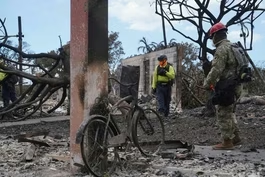
How Lahaina is recovering 3 years after devastating fires
Video has Closed Captions
How Lahaina is recovering 3 years after the devastating fires (8m 3s)

What's holding up the Iran-Oman Strait of Hormuz proposal
Video has Closed Captions
What's holding up the Iran-Oman proposal to reopen the Strait of Hormuz (5m 26s)

What the July jobs report reveals about the economy
Video has Closed Captions
What the July jobs report reveals about the strength of the economy (5m 30s)
Providing Support for PBS.org
Learn Moreabout PBS online sponsorship
- News and Public Affairs

FRONTLINE is investigative journalism that questions, explains and changes our world.
 New Episode
- News and Public Affairs

Today's top journalists discuss Washington's current political events and public affairs.

 New Episode
 New Episode
 New Episode
 New Episode
 New Episode
 New Episode

 New Episode
 New Episode
Support for PBS provided by:
Major corporate funding for the PBS News Hour is provided by BDO, BNSF, Consumer Cellular, American Cruise Lines, and Raymond James. Funding for the PBS NewsHour Weekend is provided by...